Pampanga (Kapampangan: Lalauígan ning Pampángga; Filipino: Lalawigan ng Pampanga) is a province in the Central Luzon region of the Philippines. Lying on the northern shore of Manila Bay, Pampanga is bordered by Tarlac to the north, Nueva Ecija to the northeast, Bulacan to the east, the Manila Bay to the central-south, Bataan to the southwest and Zambales to the west. Its capital is the City of San Fernando. Angeles City, while geographically within Pampanga, is classified as a first-class, highly urbanized city and is governed independently of the province.
The name La Pampanga was given by the Spaniards, who encountered natives living along the banks (pampáng) of the Pampanga River. Its creation in 1571 makes it the first Spanish province on Luzon Island (Cebu in Visayas is older as it was founded by the Spaniards in 1565). The town of Villa de Bacolor in the province briefly served as the Spanish colonial capital when Great Britain invaded Manila as part of the Seven Years' War. At the eve of the Philippine Revolution of 1896, Pampanga was one of eight provinces placed under martial law for rebellion against the Spanish Empire; it is thus represented on the Philippine national flag as one of the eight rays of the sun.
Pampanga is served by Clark International Airport (formerly Diosdado Macapagal International Airport), which is in Clark Freeport Zone, some 16 kilometres (9.9 mi) north of the provincial capital. The province is home to two Philippine Air Force airbases: Basa Air Base in Floridablanca and the former United States Clark Air Base in Angeles City. By 2015, the province has 2,198,110 inhabitants, while it has 1,079,532 registered voters.
Ancient Pampanga's Territorial area included portions of the modern provinces of Tarlac, Bataan, Zambales, Nueva Ecija and Bulacan. Pampanga was re-organized as a province by the Spaniards on December 11, 1571. For better administration and taxation purposes, the Spanish authorities subdivided Pampanga into pueblos, which were further subdivided into districts (barrios) and in some cases into royal and private estates (encomiendas).
Due to excessive abuses committed by some encomenderos, King Philip II of Spain in 1574 prohibited the further awarding of private estates, but this decree was not fully enforced until 1620. In a report of Philippine encomiendas on June 20, 1591, Governor-General Gómez Pérez Dasmariñas reported to the Crown that La Pampanga's encomiendas were Bataan, Betis y Lubao, Macabebe, Candaba, Apalit, Calumpit, Malolos, Binto, Guiguinto, Caluya, Bulacan and Mecabayan. The encomiendas of La Pampanga at that time had eighteen thousand six hundred and eighty whole tributes.
Pampanga, which is about 850 square miles (2,200 km2) in area and inhabited by more than 1.5 million people, had its present borders drawn in 1873. During the Spanish regime it was one of the richest Philippine provinces. Manila and its surrounding region were then primarily dependent on Kapampangan agricultural, fishery and forestry products as well as on the supply of skilled workers. As other Luzon provinces were created due to increases in population, some well-established Pampanga towns were lost to new emerging provinces in Central Luzon.
During the 17th century, The Dutch recruited men from Pampanga as mercenaries who served the Royal Netherlands East Indies Army, known as Papangers[4] part of the larger Mardijkers community. Their legacy can be found in North Jakarta,[5] however, there are few traces of their descendants, except for a small community in Kampung Tugu.
Sisig
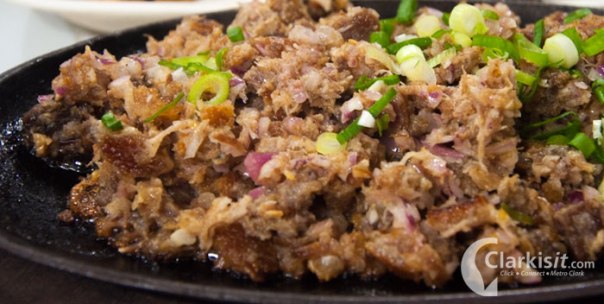
On top of the list of dishes that is well known to be an original Kapampangan dish is – sisig!. The dish consists of different pig parts (mostly coming from the head) mixed with chicken or pork liver. With these ingredients, the Kapampangan’s were able to create an iconic dish that is very well known around the country. World-renowned television chef Andrew Zimmern includes sisig as one of the dishes that can change the world. You can never claim that you went to Pampanga if you have not tasted the authentic Kapampangan sisig. There are a couple of restaurants offering this dish, but there are two establishments in Angeles City that are well-known because of their own take of the sisig: “Aling Lucing’s” and “Mila’s Tokwa’t Baboy”. “Aling Lucing’s” is known as an original for the “modern day sisig”. It is because of Lucia “Aling Lucing” Cunanan that Angeles City was named as the “Sisig Capital of the Philippines”. Even after her passing, the original branch of “Aling Lucing’s” still stands along the old rail road tracks of Angeles City called “Crossing”. Although known for their Tokwa’t Baboy (thus the name) Mila’s Tokwa’t Baboy, they are also famous for their different take on the sisig. Instead of grilling the pig’s head, Mila’s deep-fries it before serving it on a sizzling plate, making their sisig crunchier that the traditional sisig. This recipe of sisig was innovated in the 80’s and is still loved until now.
Betute and Camaru
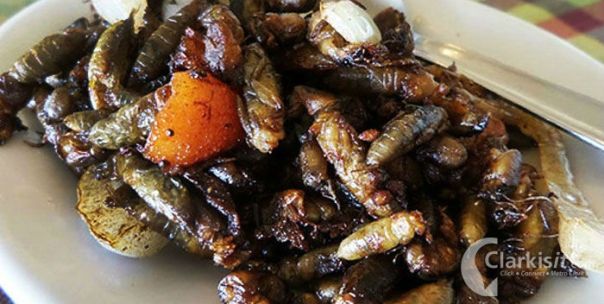
Having expansive rice fields throughout the province, it’s no doubt that the critters found in these fields ended up in the plates of Kapampangans. Categorized as exotic or bizzare, the betute (stuffed frog) and camaru (crickets) are a favorite to locals. While frog legs are common for the French, Kapampangan’s eat their frog whole, stuffed with ground pork meat, and then deep fried. And while others cringe when thinking of eating insects, Kapampangan’s just love their crickets cooked adobo style called camaru. If you want legitimate bragging rights of eating exotic Kapampangan foods, then these dishes are a definite must-try.
Buro
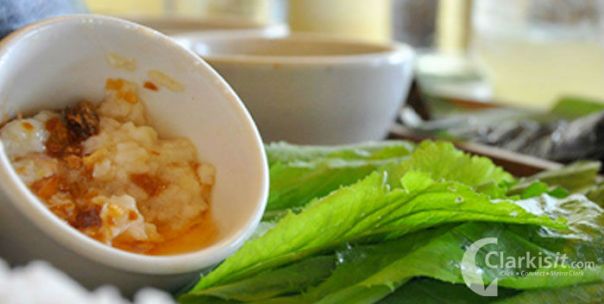
Buro or balo-balo is basically fermented rice (mixed with shrimp or fish) which is a popular condiment in Pampanga. Some find eating buro extreme, maybe because of its pungent smell and appearance, but it makes eating much better. Once you overcome the thought of eating fermented rice, you might find eating buro delectable especially with deep fried hito (cat fish), mustasa (mustard greens), and boiled vegetables (okra, eggplant, etc.) on the side.
Bulanglang Kapampangan (Guava Sour Soup)
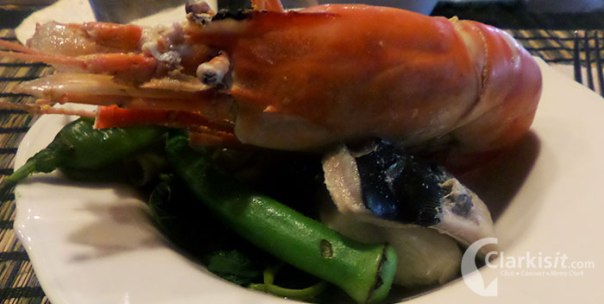
This dish looks like a typical sinigang but it smells and tastes differently. Sinigang takes its sourness from the tamarind used for the broth, while bulanglang takes its sweet and sour flavor from the native guava. Usually mixed in the fruity thick soup are milkfish belly, ulang or fresh water prawns, and pork and partnered with something salty like bagoong (shrimp paste), patis (fish sauce), or soy sauce. Celebrity chef and travel host Anthony Bourdain was able to try this dish at Claude Tayag’s Bale Dutung and describes bulanglang as “a dish with so many flavors in just one scoop.”
Murcon
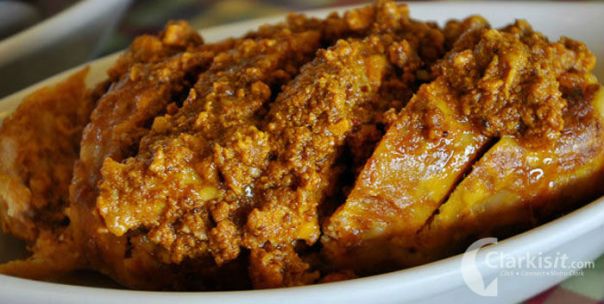
Everybody’s Café a Pampanga-bred restaurant is proud to say that their Murcon is the dish that made them known in the Philippines. Murcon is a savory meat dish which is much like an embutido or meat loaf. Pampanga’s version of this meat roll is stuffed with sausage or chorizo, carrots, hard-boiled eggs, and quezo de bola – making the flavor much richer and perfect for a cup of steaming rice. Click here for a recipe of the Murcon –
Tocino (Pindang)
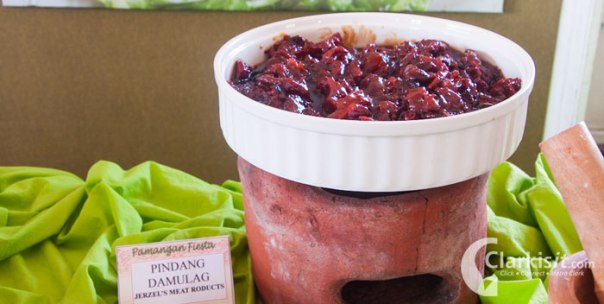
The tocino is probably one of the famed products of Pampanga that has been a staple of Filipino breakfast item for many years. If it’s your first time to hear about this dish, tocino is a processed pork meat that is sweet and salty when cooked, perfect for rice and sunny side up egg on the side. While this product is available nationwide, you should not miss-out on the chance to taste the authentic Kapampangan tocino that is offered only in the province which is “Pindang Damulag” – a thinly sliced carabao meat cured with vinegar and seasonings. The taste of pindang is sour compared to the sweet tocino that we are all familiar with, but pair it with a cup of rice with sliced tomatoes on the side, and you’ll surely experience one taste that is uniquely Kapampangan.
Tibuk-tibuk

Besides their main dishes, Kapampangans also take their desserts seriously. One dessert that you should try when visiting Pampanga is tibuk-tibuk. This is Pampanga’s version of Maja Blanca that is traditionally made with carabao’s milk, with a hint of dayap zest (local lemon) with latik on top. Tibuk-tibuk or tibok is literally translated as “heart beat” that describes the bubbles pulsating up and down (that looks like a beating heart) when the pudding is cooked. We suggest you try Susie’s Cuisine’s version of the tibuk-tibuk, for that creamy, melt in your mouth goodness that tastes like heaven.
Halo-halo
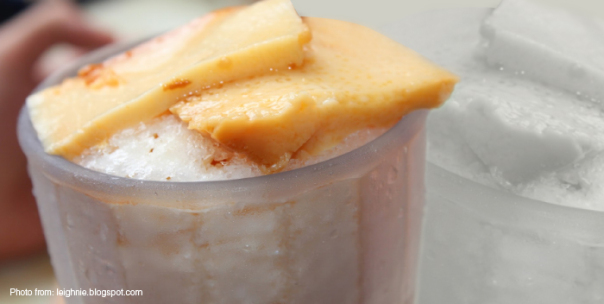
If you’re in Pampanga, don’t miss out on the chance to try two of the well-known halo-halo establishments in the area, which are Razon’s Halo-halo and Kabigting’s Halo-halo. These two names are considered as royalties in the local halo-halo scene. What makes their version of the halo-halo special is they use minimal ingredients for the dessert. Razon’s version of the halo-halo has only three ingredients which are sun-ripened saging na saba (sweetened local banana), macapuno, and leche flan with dayap rind topped with finely shaved ice. Kabigting’s Halo-halo also has a handful of ingredients which are sweet beans cooked halaya style, cream corn, and their special ingredient which is pastillas made from carabao’s milk.
San Nicolas Cookies
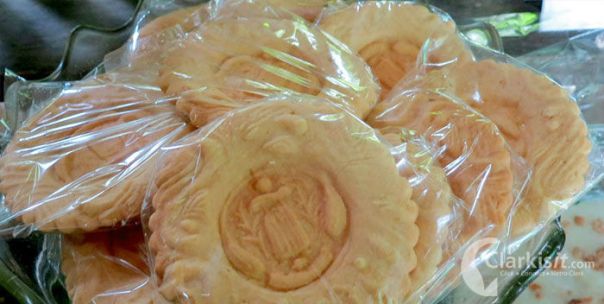
San Nicolas Cookies or Panecillos de San Nicolas is a simple pastry made from very few ingredients. What makes these cookies special are the intricate and embroidered-like design that was shaped in hand carved molds. The taste of the Panecillos de San Nicolas is very milky, deliciously crunchy, and not too sweet. The cookies are best paired with a hot cup of Chocolate de Batirol or coffee. Almost synonymous to this pastry is the name Atching Lillian Borromeo—one of Pampanga’s culinary expert and is considered as the keeper of heirloom Kapampangan recipes. If ever you happen to visit Pampanga, make it a point to order Atching Lillian’s San Nicolas cookies which you can pick-up at her residence in Mexico Pampanga.
Turrones de Casuy
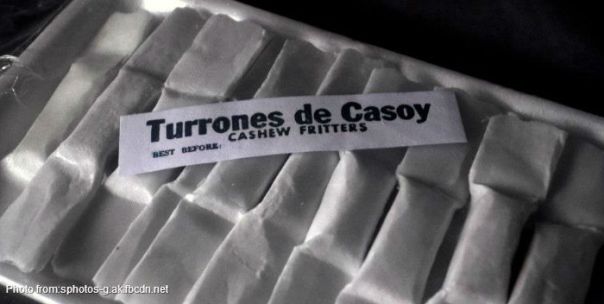
Turrones de Casuy is a favorite and an age-old delicacy in Pampanga. It like a nougat-like treat made of chopped cashew nuts cooked peanut brittle style that are shaped in long sticks wrapped in an edible paper-thin wafer. This is a specialty product of the town of Sta. Rita Pampanga and is sold in most pasalubong centers all throughout the province. If you’re planning to visit Pampanga anytime soon, do not forget to bring a mighty appetite. Because you’ll definitely have an unforgettable dining experience at the country’s Culinary Capital.

The fair features, among others, the famous sabutan and drift wood products from Aurora, fish and other marine products from Bataan, jewelries and bags from Bulacan, dairy products and metal works from Nueva Ecija, delicacies and Christmas Decors from Pampanga, pottery and wine from Tarlac, and mango products and delicacies from Zambales.
The Likha Trade Fair also serves as the culminating event for the different assistance of DTI to the MSMEs of the region. The event also showcased a special setting of products developed through the One Town One Product Next Generation Project (OTOP Next Gen) of DTI.
The trade fair was graced by DTI assistant secretary Demphna Du-Naga, Central Luzon Growth Corridor Foundation, Inc. (CLGCFI) president and Tarlac Governor Susan Yap, Regional Development Council III chairperson and Angeles City Mayor Edgardo Pamintuan, and Philippine Export Federation Central Luzon president Anthony Torres.
In her message during the opening program, Naga emphasized the objectives of the event, which are to widen the market of the small businesses by getting institutional buyers and to showcase the quality products of the MSMEs of the region. She cited that a few of the past Likha participants have leveled up, not only in terms of earnings, but also in improving their products and their brands being known to local and even foreign buyers.
She also cited the establishment of OTOP Philippines Hub to continuously display quality, locally made products around the country. Central Luzon’s OTOP Hub is located at the Bulacan Provincial Capitol Compound in Malolos City.
Yap expressed her gratitude to DTI for organizing the trade fair in order to support the small businesses of Central Luzon. She noted that the participant exhibitors of Likhang Central Luzon carry the best products of the region. She also cited that some of these products are already being brought and sold even in international trade fairs. She said that CLGCFI will continue to support the efforts of government to level up and improve the products of MSMEs.
In 2017, about 150 MSMEs participated in the Likhang Central Luzon Trade Fair and earned more than P40-million for the five-day event.

It’s celebrated in February around Clark area in Pampanga. It´s one of the biggest festivals celebrated in Angeles City for over 20 years already. If you are coming around this date, make sure you check this website to have full information about festival.
ESCAPE TO THE BEACH
Olongapo, or the beach city, has a narrow entrance guarded by the navy and has a deep sea harbor and a spot very near to Pampanga. It is also a historic place for Philippines that’s why it made it to the top tourist spots in Pampanga. Other places you can visit in Olongapo City include the the Subic Bay, Inflatable Island, Camayan Beach, and Baloy Beach.
HIKE A MOUNTAIN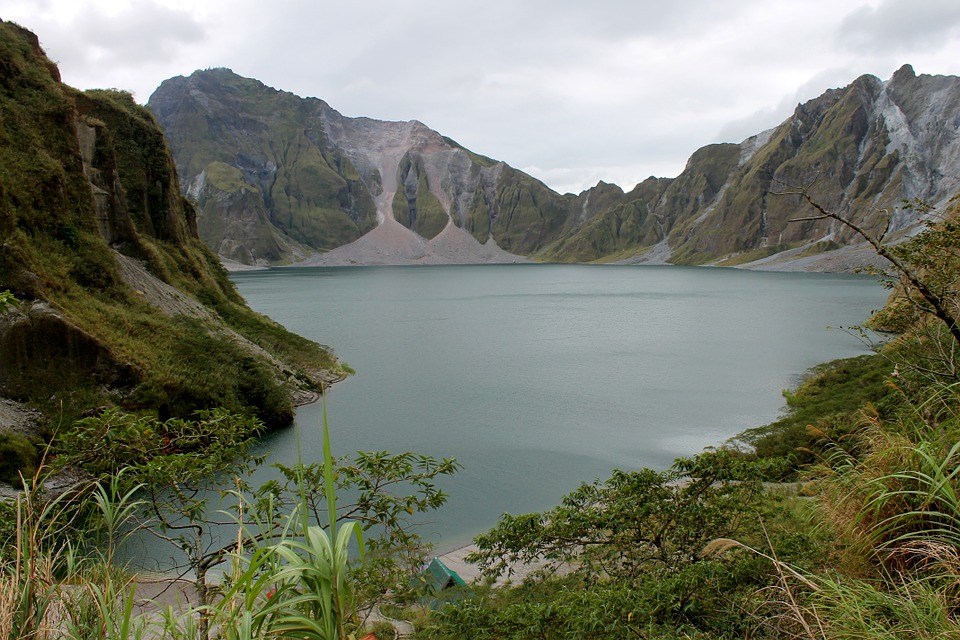
There are few mountains to hike around Pampanga. The most popular hiking place could be Mt. Pinatubo. Trekking this mountain can be done in a day, which involves, riding a 4×4 on a lahar field, and 3-hour trekking back and forth. Below are some of the price packages if you are coming from Manila:
Take note that this does not include food and may change without further notice. If you have an idea about the recent packages to hike Mount Pinatubo, please comment below and we’ll update the blog post.
MIYAMIT FALLS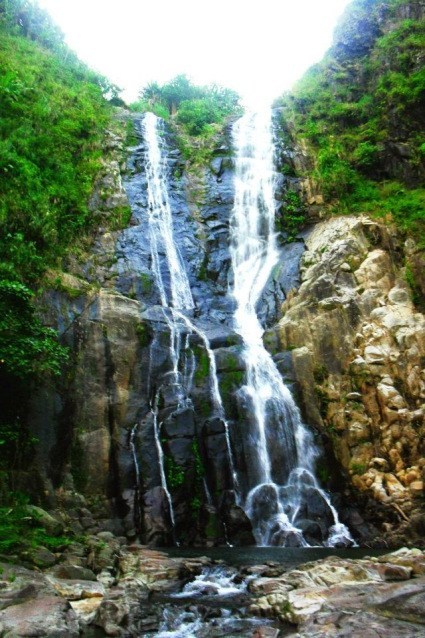
Miyamit Falls is located in Barangay Sapang Uwak, Porac in Pampanga. The trail for this falls is easy and rewarding plus you’ll love the green sceneries around it. Tourists and locals love this falls because of its proximity to Manila plus the relaxation it brings. And of course, you could even swim here!
FONTANA WATER PARK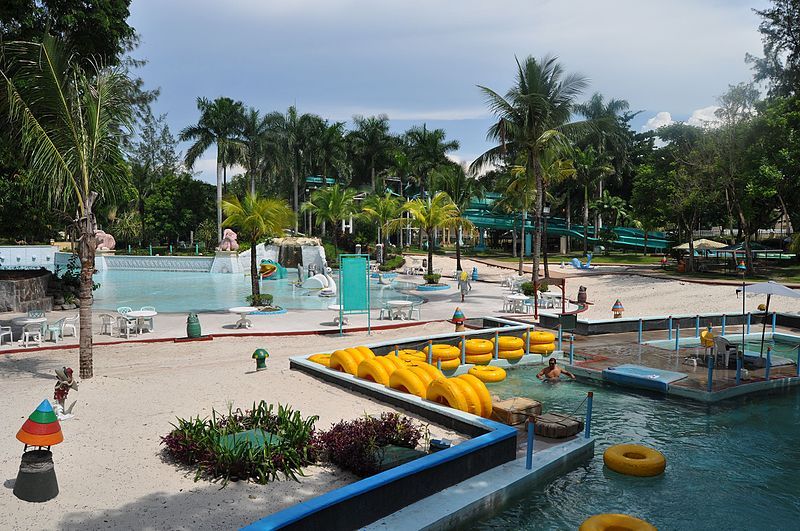
If you’re not the party type and just wanna relax and swim, you can go to places like Fontana Water Park in Clark where you can enjoy the slides and fun water facilities. You have two options, spend the day in the water park, costs around 500 PHP per person or spend your night in Fontana hotel, rates for sleeping in Fontana Hotel starts from 4000 PHP.
SANDBOX IN PAMPANGA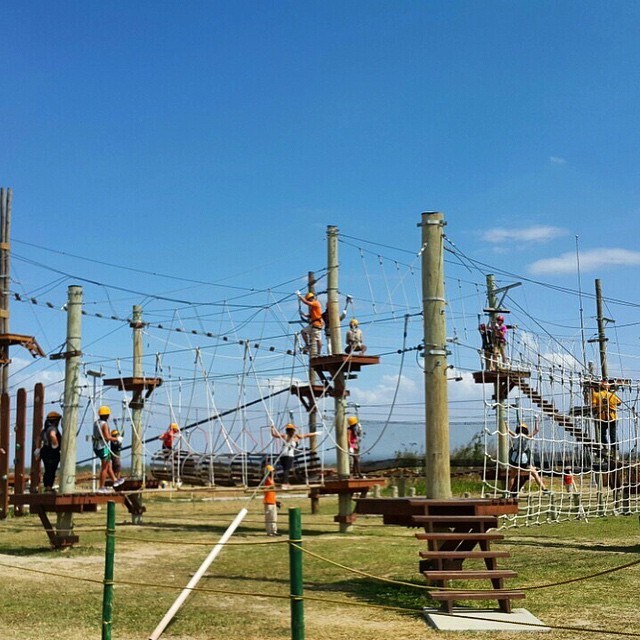
Located in Sapang Uwak, Porac in Pampanga, the thrills and challenges Sandbox will give are extraordinary. You’re safe but you still have the feeling that you aren’t because of the adventure! This place is great for a quick escape and a must-visit place in Pampanga. Try to be a bit competitive and finish every challenge faster than your friends and families!
DECA WAKEBOARD PARK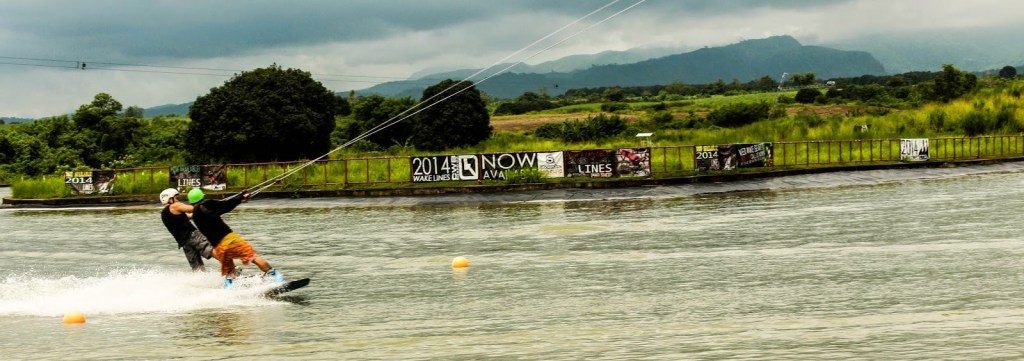
Another wakeboarding spot that you shouldn’t miss! Pump those adrenaline once more as you ride these boards on high speed. You’ll love the lush sceneries everywhere as you enjoy yourself on wakeboarding in Jose P. Laurel Avenue in Pampanga. Definitely a must try tourist spot in Pampanga!
SAN GUILLERMO PARISH CHURCH
San Guillermo Parish Church is located in Bacolor, Pampanga. It was originally constructed by the Augustinian Friars in 1576, making it one of the oldest churches in the province. Inside, there are paintings of the Pinatubo eruption in 1991.
HOLY ROSARY PARISH CHURCH
Holy Rosary Parish Church is one of the most iconic places in Angeles City, the locals call it “Pisambang Maragul”. Santo Rosario Church, or now known as the Holy Rosary Parish Church is a beautiful sight to visit having two tall towers and castle-like structures but more than its magnificent exterior, this house of worship carries a lot of controversial history that was held during the Spanish era. It’s a must-visit in the list of Pampanga tourist spots!
ZOOCOBIA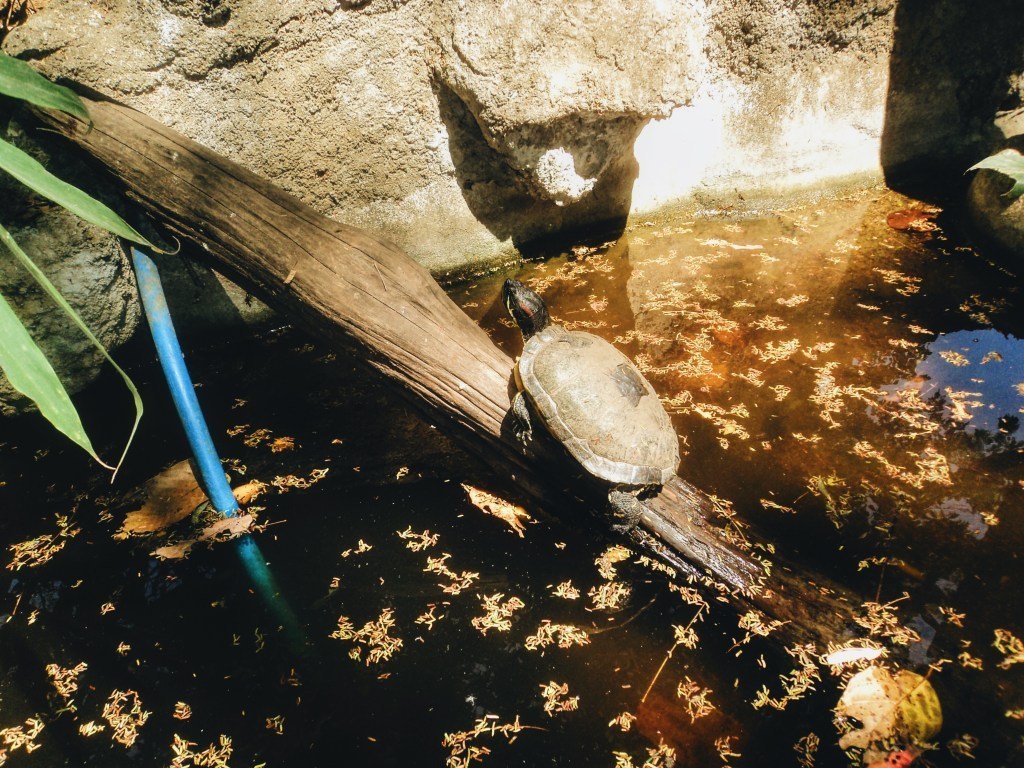
Zoocobia Fun Zoo can be anyone’s go-to place, whether a family with kids, grown-ups or group or friends, this is one of the places you won’t forget! There are so many thrilling activities for fun-lovers of all ages will surely enjoy. Besides from the rides, they also serve affordable meals that provides a little bit of everything for you to try. Entrance fee is 300-400 PHP for adults while children under three feet can go inside for free!
FLYING AROUND MT PINATUBO FROM CLARK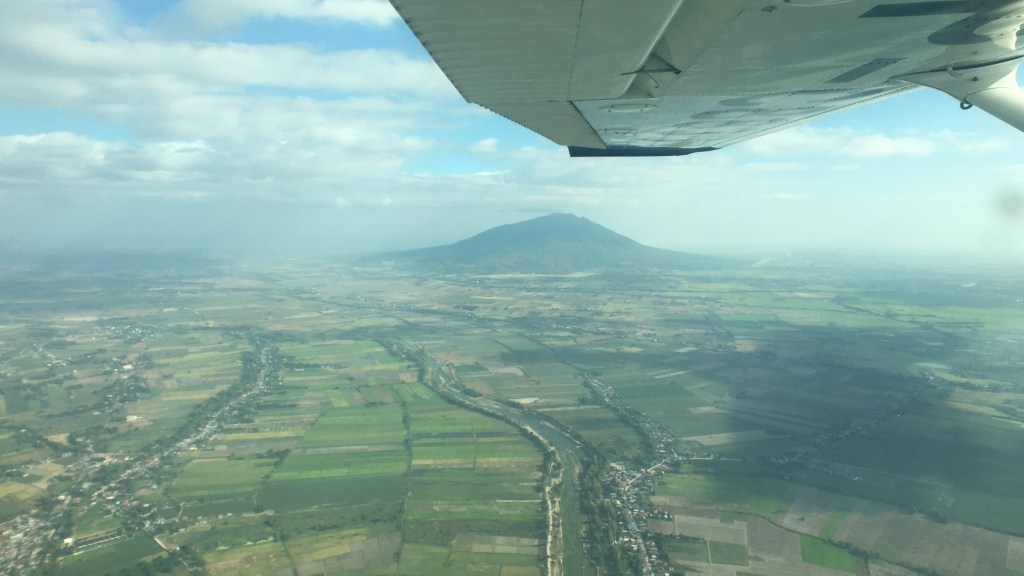
Clark is a military air base and you can get a flight around Mount Pinatubo and Mount Arayat. Is it true that some places are best enjoyed from up above? We walk the streets of Angeles City many times a year, but looking down the city and the provincial parts of it (farm lands and non-city/residential ares) was definitely more beautiful.
SKY RANCH SAN FERNANDO PAMPANGA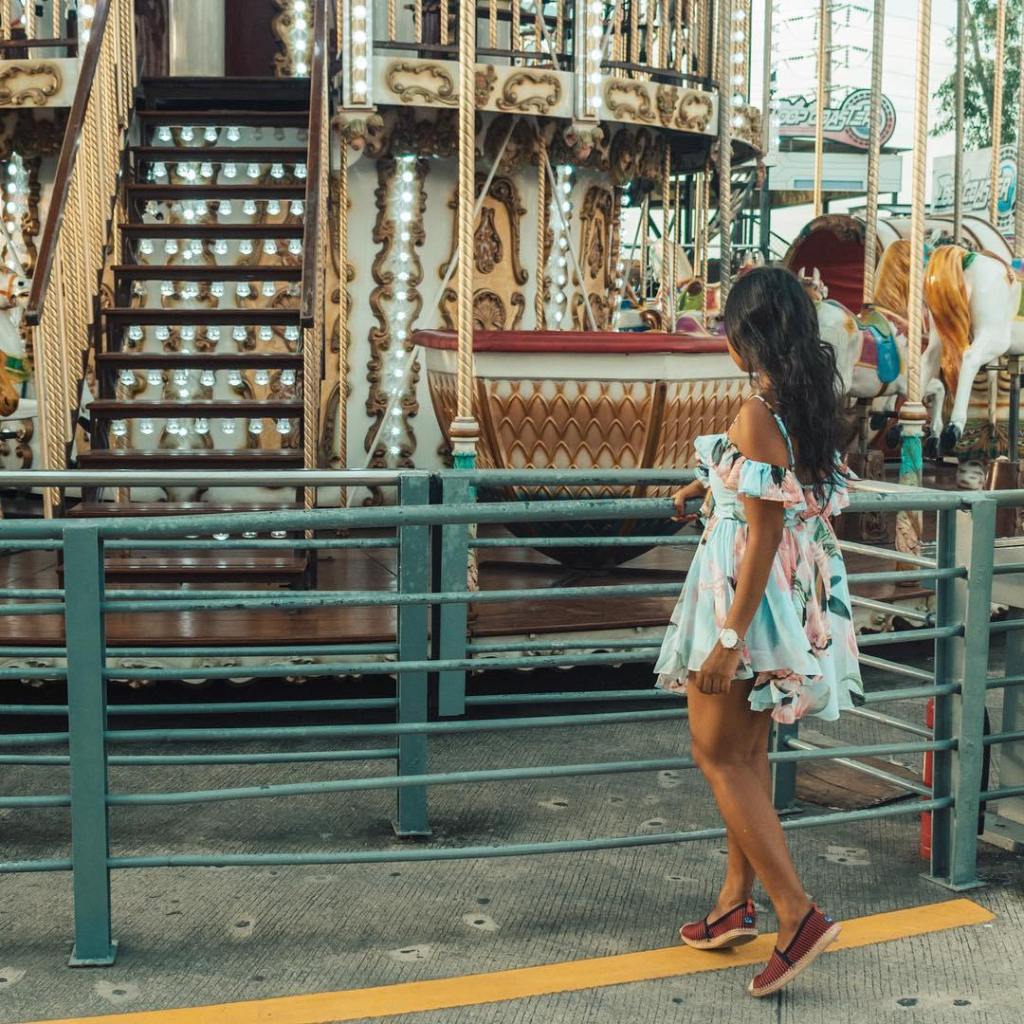
Missing the rides in the city? Try riding here at Sky Ranch. This place is good for families, friends and just you, it’s fine too. You’ll enjoy the ambiance of this happy place because everybody is just enjoying every ride and attraction they try. You would surely enjoy the experience in Sky Ranch!
PUNNING HOT SPRING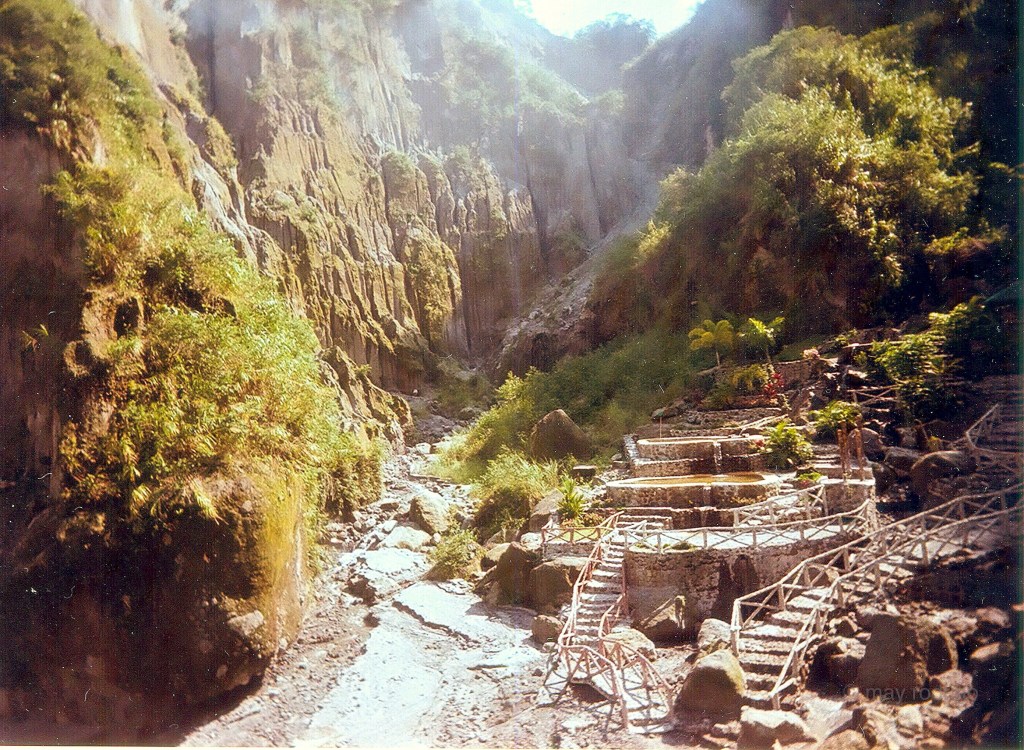
Puning Hot Spring in Angeles City is a full-service hot spring that will surely pamper you to the max. It has natural hot springs that purify your skin and detox your system. Besides from its hot spring, they also provide multiple spa services. Throughout, the view is beautiful and the entire experience is ultra-relaxing, yeah ultra! Prices start from 3 500 PHP per person for a minimum of 3 people.
FESTIVALS IN PAMPANGA: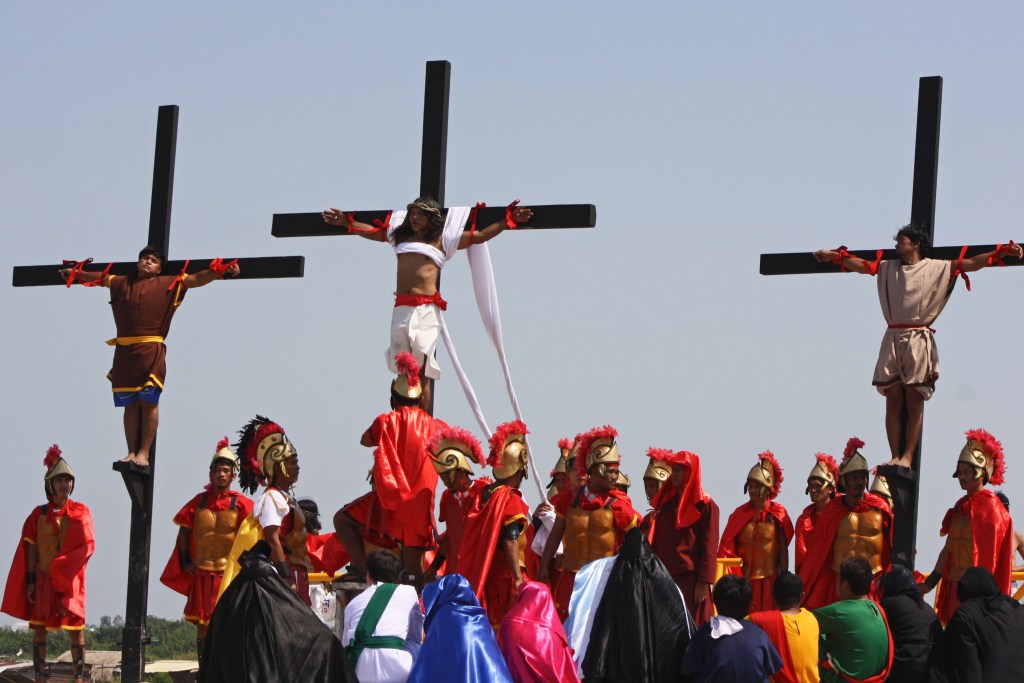
It’s a religious and cultural activity most of Catholic Filipinos observe in the Philippines! People are literally imitating what Jesus went through before His death. You can see them in the streets around Angeles City participating in their Filipino traditions and practices from Wednesday to Friday in Holy week. It’s also a tradition for Filipinos to avoid meat during Holy Week, so fish and vegetable dishes are famous in this period.
GIANT LANTERN FESTIVAL IN SAN FERNANDO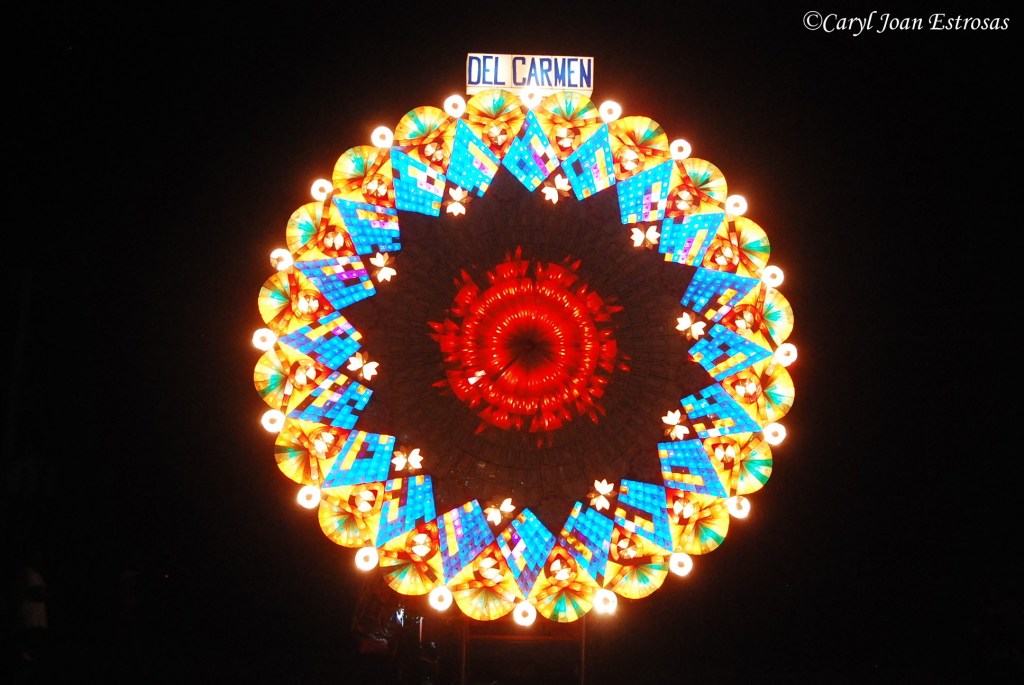
The huge and intricately designed lanterns, or parol, are exhibited every December in San Fernando City. The number of lights are limited to 10,000 light bulbs for each Giant Lantern participants during last years. This is a famous event in Pampanga that many locals and tourists join.
SINUKWAN FESTIVAL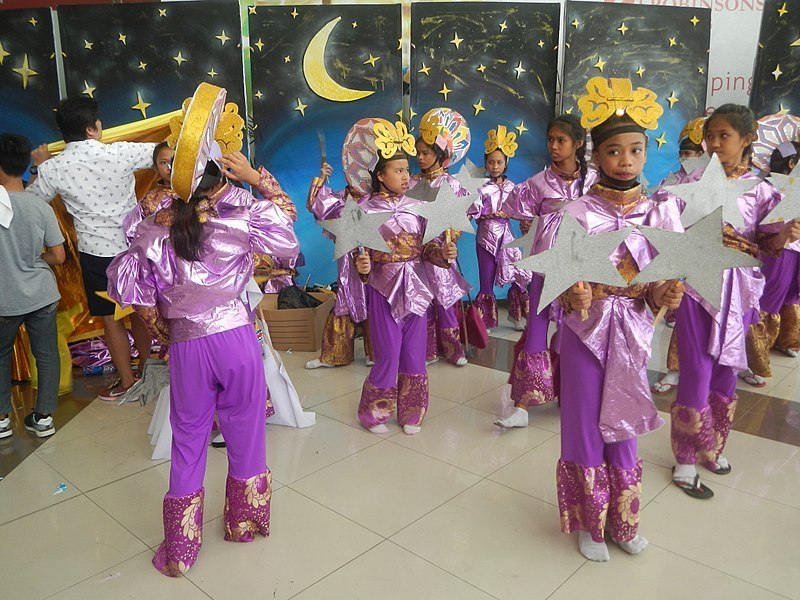
Sinukwan Festival is celebrated in San Fernando City for one whole week. There are spectacular street dances and it’s so colorful. This is celebrated on November or December every year.
Pampanga covers a total area of 2,002.20 square kilometres (773.05 sq mi) occupying the south-central section of the Central Luzon region. When Angeles City is included for geographical purposes, the province's area is 2,062.47 square kilometres (796.32 sq mi). The province is bordered by Tarlac to the north, Nueva Ecija to the northeast, Bulacan to the east, the Manila Bay to the central-south, Bataan to the southwest, and Zambales to the northwest.
Its terrain is relatively flat with one distinct mountain, Mount Arayat and the notable Pampanga River. Among its municipalities, Porac has the largest area with 314 square kilometres (121 sq mi); Candaba comes in second with 176 square kilometres (68 sq mi); followed by Floridablanca with 175 square kilometres (68 sq mi). Santo Tomas, with an area of only 21 square kilometres (8.1 sq mi), is the smallest.
The population of Pampanga in the 2015 census was 2,198,110 people, with a density of 1,100 inhabitants per square kilometre or 2,800 inhabitants per square mile. If Angeles City is included for geographical purposes, the population is 2,609,744, with a density of 1,265/km2 (3,277/sq mi). The native inhabitants of Pampanga are generally referred to as the Kapampangans (alternatively Pampangos or Pampangueños).
LanguagesMain articles: Kapampangan language, Tagalog language, and Sambal language The whole population of Pampanga speak Kapampangan, which is one of the Central Luzon languages along with the Sambalic languages. English and Tagalog are rather spoken and used as secondary languages. There are a few Sambal speakers in the province, especially near the border of Zambales.
ReligionOur Lady of Grace Parish in Mabalacat.
The province of Pampanga is composed of many religious groups, but it is predominantly Roman Catholic.
Other prominent Christian groups include the Seventh-day Adventist Church, Aglipayan Church, Ang Dating Daan, United Methodist and many others.
Islam is also present in the province, mainly due to migrants originating from the south, as well as Buddhism, which is practiced by a few people of Chinese descent.
Boat cultureThere have been proposals to revitalize the karakoa shipbuilding tradition of the Kapampangan people in recent years. The karakoa was the warship of the Kapampangan from the classical eras (before 15th century) up to the 16th century. The production of the karakoa and its usage were stopped by the Spanish colonialists to establish the galleon ship-making tradition instead, as a sign of Spanish dominance over the Kapampangan.